For the past month, I have been having a strange kind of fear. A fear that is quite unsettling.
A fear for the future generations — for my daughter and my son, for my nieces and nephews, and for all the little children I see playing in the playground every evening.
How are they going to manage without clean, drinkable water, real, unadulterated food, safety and jobs?
How?
I don't have an answer.
And perhaps that is what scares me the most.
I have been thinking about this a lot lately, and somehow, AI has become one of the biggest triggers for this fear.
I learnt a few AI tools at a very basic level and had been using them to correct some of my sentences or occasionally generate an image for my daughter's school projects. Once, I even tried something different. I typed, "I am feeling really low today," just to see whether an AI tool would actually empathise with me.
Why did I type that?
One of my friends had mentioned, rather casually, that ChatGPT understands her better than her husband. Around the same time, I heard about a case involving a teenager who was constantly 'talking' to an AI tool because he was upset with his parents, and the interaction reportedly took a very disturbing turn.
The response I received to my own prompt actually scared me. I never tried that experiment again.
At the time, I brushed it aside.
But perhaps that was my first uncomfortable encounter with the idea that AI could become more than just a tool. It could become something people depend on emotionally.
And that thought has stayed with me.
Coming back to my fear
- The water scarcity is real.
- Food adulteration is happening.
- Climate change is not a myth.
- Glaciers are melting.
- Mountains are breaking.
- Crime against humanity continues to make headlines.
- Lives don't always feel safe.
And while our generation may have another few decades, I often wonder what kind of world we are leaving behind.
In the name of development, we have done so much damage to Mother Earth that sometimes I wonder whether we have already crossed the point of recovery.
There are protests everywhere. There are organisations and individuals working tirelessly to restore some kind of balance. At the same time, there are millions of people working overtime simply to make money for themselves and their future generations.
And I understand that.
We all want financial security for our children.
But what happens when the environment around those children becomes increasingly difficult to live in?
For a while, perhaps, people with money can afford premium drinking water, air-conditioned homes and better healthcare. But what happens when the problem is no longer something money can completely protect us from?
That is the thought that frightens me.
And then there is AI
AI is slowly becoming almost like oxygen.
Do we really need an AI-generated poster for every drawing class?
For years, art teachers created such posters using their own creativity. Today, many posters, invitations and cards look remarkably similar because they are being generated from the same kinds of templates and prompts.
Advertisements and movies are increasingly using AI.
Do we no longer need creative actors, writers, illustrators and technicians?
Companies take pride in how quickly they can generate presentations using templates and AI tools. Enter a prompt. Add the numbers.
Boom!
Your pitch presentation is ready.
Complete music albums can be created with AI. Children's books can be personalised by simply changing the child's face. Stories can be generated in seconds.
As a writer, I have to admit — this angers me.
Not because technology is inherently bad. Technology has always helped humanity do things faster and better.
But where do we draw the line between using a tool and replacing the human being who created the thing in the first place?
We often talk about AI taking away corporate jobs.
But what about creative and vocational professions?
What happens to the illustrator who spent years learning to draw?
What happens to the musician who spent years practising an instrument?
What happens to the writer who spent years learning how to tell a story?
What happens to the teacher who used to spend an evening creating a beautiful poster for her students?
If everything can be generated instantly, will we still value the people who spent years learning how to create?
And then I started reading about data centres
I came across information about the amount of water used by large data centres, particularly for cooling. Some estimates suggest that a large hyperscale data centre can consume anywhere between one million and five million gallons of water a day, depending on factors such as its size, location and cooling technology. (Source: Google)
That number scared me.
Then I started reading more.
I came across a detailed article discussing the myths and realities of data centres using water. It gave me a much more nuanced understanding of the issue.
https://www.fwpcoa.org/content.aspx?page_id=5&club_id=859275&item_id=130961
Companies such as Google and Microsoft have also made commitments around water replenishment and reducing their environmental impact.
So perhaps the reality is more complicated than simply saying, “AI is drinking our water."
The amount and type of water used depends on how data centres are designed and cooled. There is also a trade-off between water and power — reducing water consumption can sometimes increase energy consumption, which itself has an environmental cost.
There are questions about whether non-potable water can be used, how much water can be recycled, and whether treated water can safely be returned to the environment.
I don't pretend to have the technical answers.
But one question remains in my mind:
When water is already scarce in many parts of the world, how do we decide where that water should go?
That is the question that bothers me.
And then I look around Hyderabad
While driving through the roads of Hyderabad, I see massively tall buildings coming up everywhere.
And two questions immediately pop into my head:
- Is there actually so much demand for these insanely expensive apartments?
- Where will the water come from to cater to all these residents and maintain these buildings?
Hyderabad is already a rocky plateau, and groundwater is under pressure.
So why are we continuing to build at this pace?
What happens when a water body is filled or damaged to make space for yet another concrete structure?
Again, I don't have all the answers.
But I cannot stop asking the questions.
Because whether it is a data centre, a luxury apartment complex, a factory or something else, everything ultimately needs resources.
And resources are not infinite.
Then comes the question of work
This is perhaps the most personal part of my fear.
Students are competing fiercely to get into colleges and universities.
Parents are spending years and huge amounts of money preparing their children for successful careers.
But once these children finish their education, where will they work?
The job market is changing rapidly.
And AI is not affecting only the jobs that we traditionally thought of as repetitive.
Even creative jobs are changing.
Schools have introduced subjects related to AI. Children are being encouraged to learn it because it is supposedly the future.
But how many children will actually end up working on AI models?
And if everyone is being trained to use AI, who will create the things that AI is replacing?
I started looking to return to my corporate career as a Product Manager.
Almost every job description I came across mentioned "knowledge or experience with AI tools or AI projects." Why?
I also looked at Copywriting and Technical Writing roles.
They too wanted candidates with hands-on experience with AI tools. Why?
I did not fit in.
And this isn't only about me.
I know people who have lost their jobs and have not been able to find another one for more than a year. Some of them are the sole breadwinners of their families.
Won't this eventually build frustration?
If people are educated, qualified, experienced and willing to work, but there simply aren't enough jobs for them, what happens to that frustration?
What happens when people feel that they have done everything they were told to do — study hard, get qualified, work hard — and yet there is no place for them?
Could that eventually become a fight for survival?
Isn't some version of that already happening?
And perhaps that is why all these things feel connected to me
I know this post must be coming across as extremely negative.
It is.
Because I am genuinely scared.
I am seeing things around me and wondering where they will lead.
- Climate change.
- Water scarcity.
- Food adulteration.
- Environmental degradation.
- The increasing dependence on AI.
- The resources required to power and cool data centres.
- Job losses.
- The disappearance of some creative and vocational opportunities.
- Highly educated, qualified and talented people struggling to find employment.
- And children preparing for a future that none of us can accurately predict.
Someone once told me that I should stop worrying about things that are not in my hands. I understand the logic. But how do I stop worrying when all these things affect my children?
Yes, I have almost completely stopped using AI tools.
But how much does that really help?
If I stop generating one image, one presentation or one piece of content using AI, does the larger problem change? Probably not.
So, what can we actually do?
This is where I genuinely need answers.
Not as a writer.
Not as a mother.
Not as someone who has an opinion about AI.
But simply as a regular citizen and a human being living on this planet.
What can we do?
How do we contain the damage to our environment?
How do we protect our water bodies?
How do we create meaningful jobs?
How do we ensure that creative and vocational professions continue to have value?
How do we teach our children to use technology without becoming completely dependent on it?
And perhaps most importantly, how do we make sure that development doesn't become another word for destroying the very resources that allow us to develop.
************************************************************************************************************
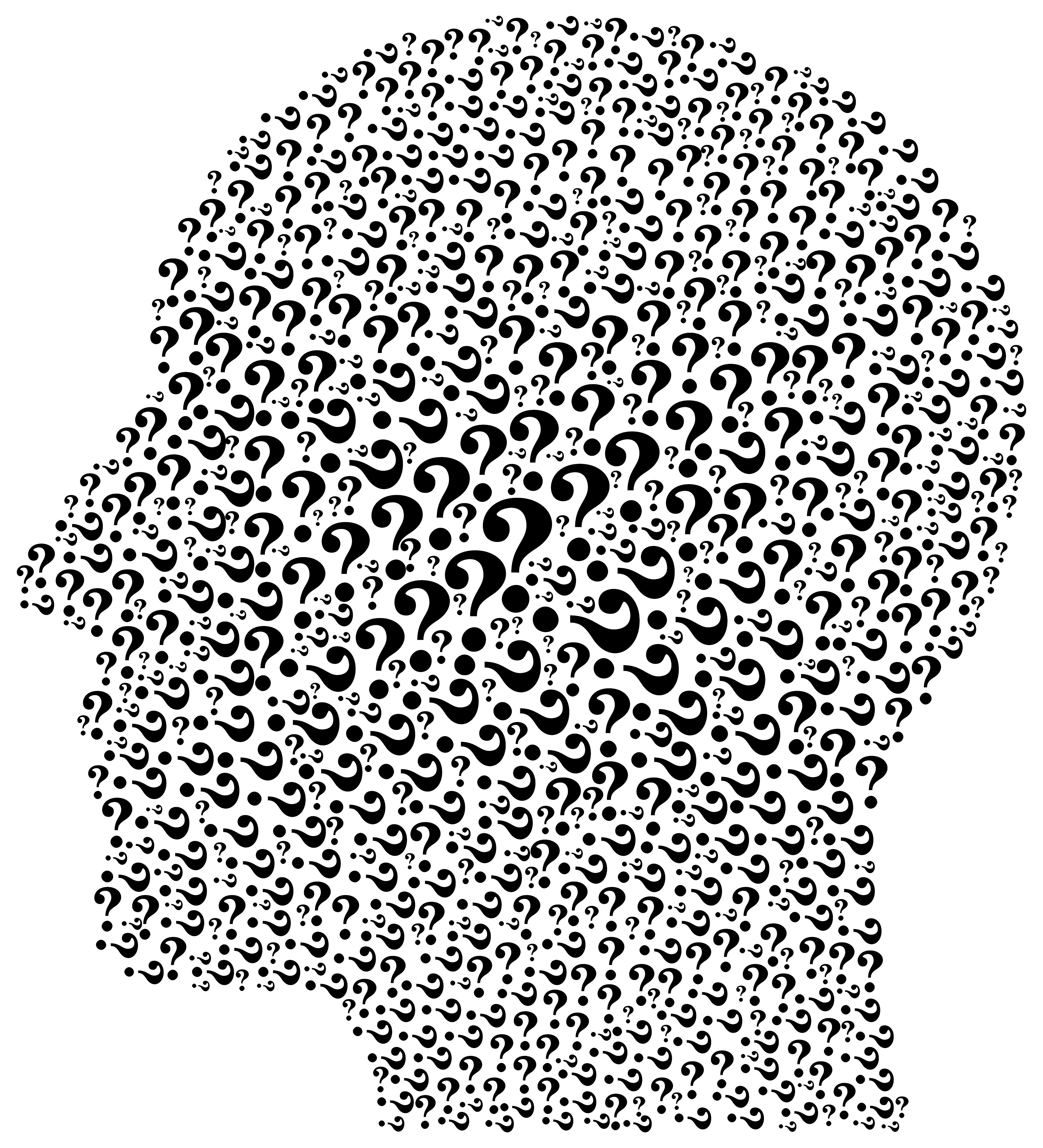
Image Courtesy: Illustration by Open Clip Art on Unsplash
************************************************************************************************************

Comments (0)
Leave a comment