

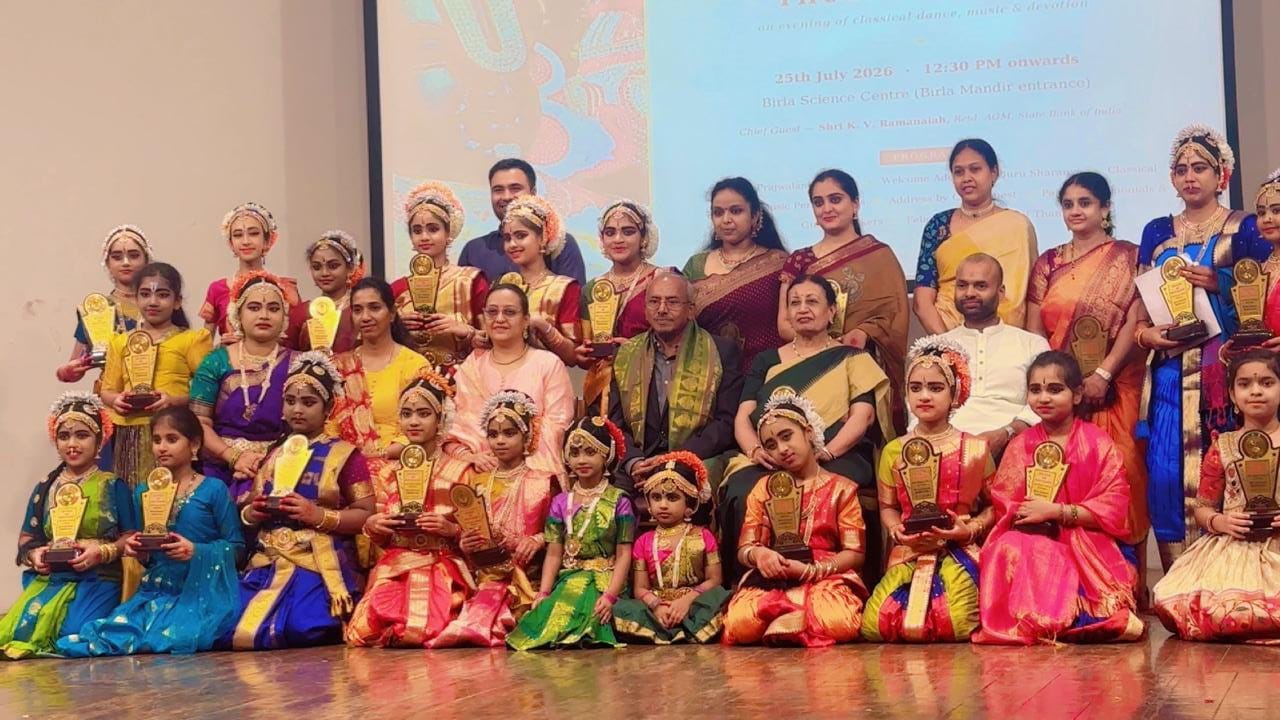
25th July 2026 was a special day.
From a Hindu perspective, it was Tholi Ekadasi - the day Lord Vishnu is believed to begin His cosmic slumber on the serpent Adishesha, marking the beginning of the sacred four-month period of Chaturmasya.
For us, however, it was another reason to celebrate.
It was a special day for our daughter's Devi Dance & Music Academy.
The students had been preparing for weeks, and this time the performances were held at the beautiful Birla Auditorium - one of the finest venues in Hyderabad. Most of our daughter's earlier performances had been in temples or older auditoriums. Those venues had their own charm and history, but they were often less comfortable for performers and the audience alike. Birla Auditorium felt different from the moment we walked in.
Like every performance day, the morning began in a rush.
Time somehow becomes shorter on dance days.
The children first get their makeup done at their teacher's place. Then begins what appears to be a simple task—but every dance mom knows otherwise.
The hair.
The jewellery.
The costume.
Every strand of hair and every ornament has to be secured meticulously. If even one accessory comes loose during a performance, it distracts the dancer.
As someone who spent most of her childhood as a tomboy, I never imagined I would one day become reasonably skilled at creating elaborate Kuchipudi hairstyles.
I still remember the first time I attempted it on my own. It was disastrous.
Both of us were stressed. The hair bun loosened, a few accessories shifted, and although my daughter completed her performance, she wasn't happy because she kept worrying about them.
This time, though, something felt different.
Without much effort, everything stayed exactly where it was supposed to. I smiled to myself. Looks like I have learnt too.
We left home at least fifteen minutes later than planned, but thankfully reached on time. My father was already there.
The auditorium looked beautiful—clean, spacious, and elegant.
After a few last-minute costume adjustments, our daughter disappeared backstage with her friends to help their teacher.
This was her tenth stage performance!
Ironically, it was probably my first performance where I truly sat back and watched.
Usually, I spend the entire time worrying, adjusting costumes, taking photographs, or simply waiting for my daughter's turn.
This time, I could simply enjoy the programme.
One reason was the excellent anchoring.
A senior student introduced every performance in English, explaining both the theme of the composition and the background of the performer. Earlier programmes were usually conducted entirely in Telugu, making it difficult for us to understand the context behind each dance.
Watching the stories unfold made the performances even more meaningful.
Some dances our daughter had performed earlier were now being presented by other students.
She herself performed a new piece, and I noticed how much her expressions had matured.
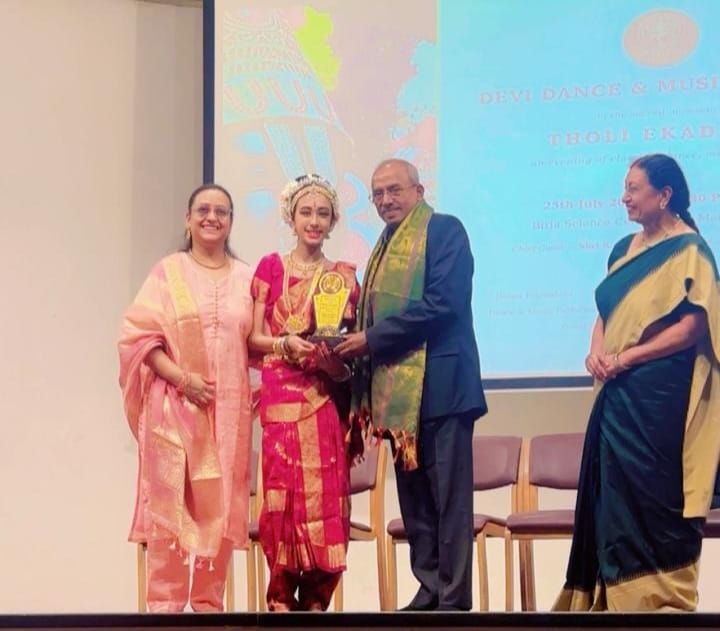
But two performances stayed with me long after the programme ended.
The first was Tarangam, performed by the Guru - Sharanya Kasa - herself. It was the first time we had seen her perform on stage.
For those unfamiliar with Kuchipudi, Tarangam is one of its most breathtaking segments. The dancer balances on the rim of a brass plate while executing intricate rhythmic footwork. Traditionally, many dancers also balance a pot of water on their heads. The piece is performed to verses from the 17th-century classic Sri Krishna Leela Tarangini (I searched it on Google)
She chose not to use the water pot.
She didn't need to.
Her balance, rhythm, stamina, and above all, her expressions were enough to leave us spellbound.
In that moment, it became obvious why she is not merely a dance teacher. She is a Guru.
The second performance that touched me deeply was a group presentation by the senior students in praise of Lord Venkateswara.
When it ended, I felt an overwhelming urge to hug every one of those girls. Of course, I didn't. That would probably have been a little too dramatic. But that was the emotion the performance evoked.
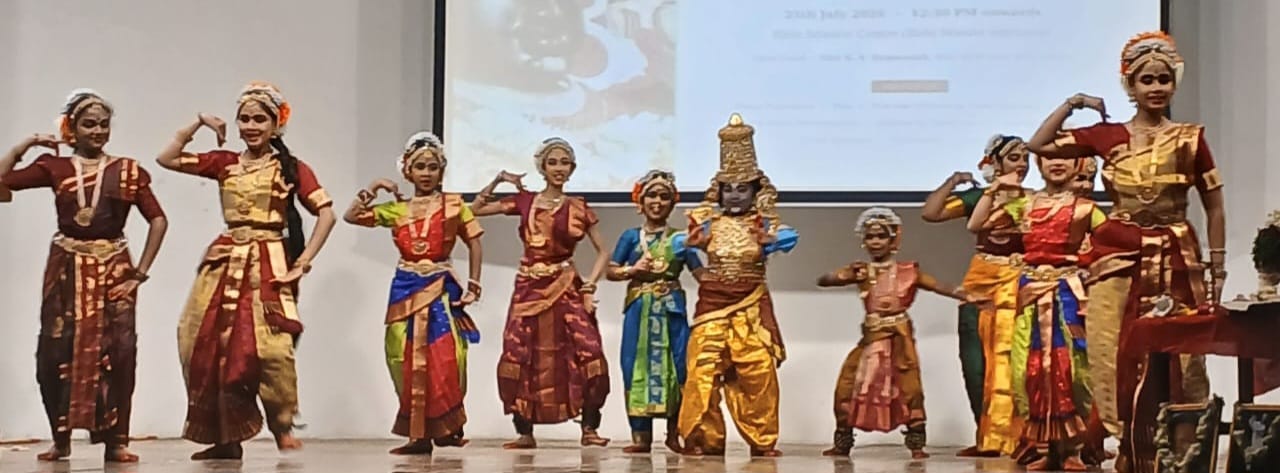
For perhaps the first time, I wasn't only watching the dances.
I was noticing the tradition.
I found myself appreciating the beauty of the Guru-Shishya relationship.
Their Guru isn't much older than me. In fact, she is younger than me. Yet mastery has nothing to do with age.
Her knowledge, discipline, and dedication have earned her the respect of every student. She doesn't rush her students.
She doesn't simply teach dance steps. She slowly introduces them to discipline, etiquette, humility, and respect for the art.
Only after reaching a certain stage are students given their Gajjelu (ghungroo).
Even that is not a casual event. It is a ceremony.
After offering prayers to Lord Nataraja, the Guru blesses the student by handing over the Gajjelu. The student, in turn, offers gifts as a mark of gratitude and respect.
Once a student has received the Gajjelu, they must wear them for every performance.
Before tying them, however, they first seek the Guru's blessings, and only after the Guru hands them over do they wear them. And once the Gajjelu are tied, they do not wear footwear until they are removed.
I remember watching my daughter walk barefoot across a scorching road without a single complaint because she was wearing her Gajjelu. The same girl who can throw the occasional tantrum at home.
Some traditions quietly teach discipline better than a hundred lectures ever could.
Then there is the dedication.
The endless rehearsals before every performance.
The stamina required to carry heavy costumes, makeup, jewellery, and elaborate hairstyles for hours.
The respect shown towards the stage.
The art of storytelling through movement and expression.
The bond between a Guru and her Shishya.
The unseen support of families working behind the scenes.
And yes...
the patience of mothers trying to get their daughters ready on time.
People often think classical dance teaches dance. It certainly does. But that is only the beginning.
It teaches discipline.
Humility.
Patience.
Perseverance.
Respect.
Grace under pressure.
In short, it builds character.
In fact, I believe this is true of every serious skill.
Whether it is classical dance, skating, music, painting, or learning a musical instrument, everyone should experience learning something under the guidance of a teacher.
Self-learning is wonderful. But a Guru does something different.
A Guru keeps you grounded.
They correct you without discouraging you.
They see your weaknesses honestly.
Sometimes, they even recognise your strengths long before you do.
I often watch the children in my society learning to skate.
In the beginning, they fall repeatedly and cry for their parents. A few weeks later, the same children race across the skating rink with confidence.
Or think of a child learning the guitar. Their fingertips hurt. Sometimes they even bleed. Many feel like giving up.
The ones who continue are often the ones who learn to trust their teacher through the difficult days.
That is when growth truly begins.
So, if you haven't already, find one skill that speaks to you.
Learn it.
Stay with it.
Respect the person who teaches you.
Because somewhere along the journey, you may realise that you weren't just learning a skill.
You were quietly becoming a better version of yourself.
And, lastly, age has nothing to do with learning something new. Not all the students of Devi Dance & Music Academy were children. There were mothers and grandmothers too. Kudos to all of them.


Comments (0)
Leave a comment