
Wall-E Wasn't Just a Movie. It Was a Warning.
Many years ago, I watched Wall-E. A lone robot tirelessly cleaned up a destroyed and abandoned Earth while the last surviving humans lived aboard a spaceship. They floated around on automated pods, obese and completely dependent on machines. They had practically forgotten how to walk, use their hands, or even interact with one another.
At the time, it felt like an exaggerated work of science fiction.
Today, I'm not so sure.
Recently, while watching a popular series on an OTT platform (yes, I haven't paid for the ad-free version), an advertisement for Ray-Ban Meta smart glasses appeared.
Ray-Ban: a leader in sunglasses.
Meta: a company shaping much of our digital lives.
The models walked confidently, wearing their intelligent glasses and casually speaking commands into the air:
- "Hey Meta, start recording."
- "Hey Meta, play a playlist matching my vibe."
- "Hey Meta, tell me something about this movie."
My first reaction?
Wow! That's cool.
My second reaction?
Do we really need this?
The connection between the Wall-E humans and these models suddenly became impossible to ignore. In both cases, the less humans did for themselves, the more technology did for them. Their hands became optional (almost all the models had their hands in their pockets). Their thinking slowly became outsourced.
Don't get me wrong—I genuinely admire technology and the speed at which it evolves. Artificial Intelligence has enormous potential to solve complex problems, improve healthcare, accelerate research, and make life easier in countless ways.
What worries me isn't AI becoming smarter.
What worries me is humans becoming comfortable enough to stop exercising the very abilities that made us intelligent in the first place.
Do we still need to press a tiny button to start recording?
Probably yes.
Can I still search for information about a movie myself instead of asking AI?
Absolutely.
Do I really need AI to decide which songs match my mood every single time?
Maybe not.
None of these tasks are difficult. In fact, they are tiny moments where our brain observes, remembers, decides, and learns. Individually, they seem insignificant, but together they keep our minds actively engaged.
Ironically, I am no exception.
I happily order groceries and food through apps instead of stepping outside. Then I complain about my back pain and download another app to monitor my health. The very technology that saves me a walk also sells me a solution for not walking enough.
Convenience has become a fascinating cycle.
If it isn't an app, it's a ready-to-use product, a DIY kit, or a service promising to eliminate the smallest inconvenience. The moment I experience discomfort, I instinctively open a search engine, find a solution, pay with my credit card, and move on.
Life has never been more convenient.
But convenience comes with a hidden question:
What are we no longer practising?
If this were only about convenience, I probably wouldn't worry much. But research suggests we're paying a price.
Studies indicate a concerning decline in mental well-being among younger generations in India. The Mental Health Million Project found significantly lower mental health scores among adults aged 18–34, highlighting factors such as early smartphone exposure and reduced real-world coping mechanisms. The Economic Survey of India has also identified digital addiction as an emerging public health concern, particularly among children and adolescents. At the same time, rapid advances in AI and increasing workplace demands have intensified concerns about stress, burnout, and job insecurity among many technology professionals.
Of course, technology alone isn't responsible for these challenges. Many social, economic, and personal factors shape human behaviour. But our increasing dependence on digital tools deserves thoughtful reflection.
We are witnessing shorter attention spans, growing digital dependence, and fewer meaningful face-to-face conversations. Many people instinctively reach for a screen during every spare moment. Our tolerance for inconvenience seems to be shrinking, and even minor frustrations often trigger disproportionately strong reactions.
Our experiences shape both our intelligence and our emotional responses. A frightening experience in water teaches the brain to be cautious around it. Listening to different kinds of music over the years helps us discover our tastes. Trying different styles of clothing gradually shapes our sense of fashion.
Learning doesn't happen only in classrooms.
It happens every single day through countless tiny decisions.
If we begin outsourcing too many of those decisions—what to watch, what to listen to, what to remember, where to go, what to write, even how to think—our devices continue becoming smarter. At the same time, our own minds have fewer opportunities to practise.
I'm not suggesting that we reject technology or Artificial Intelligence. That would be unrealistic.
I'm simply wondering whether, in our pursuit of convenience, we're slowly giving away small pieces of our independence without even noticing.
Perhaps the real danger isn't that AI will become intelligent.
Perhaps the real danger is that we will stop practising intelligence ourselves.
After all, how difficult is it to press a button, choose a playlist, or search for an answer once in a while?
—------------------------------------------------------------------------------------------------------------------------
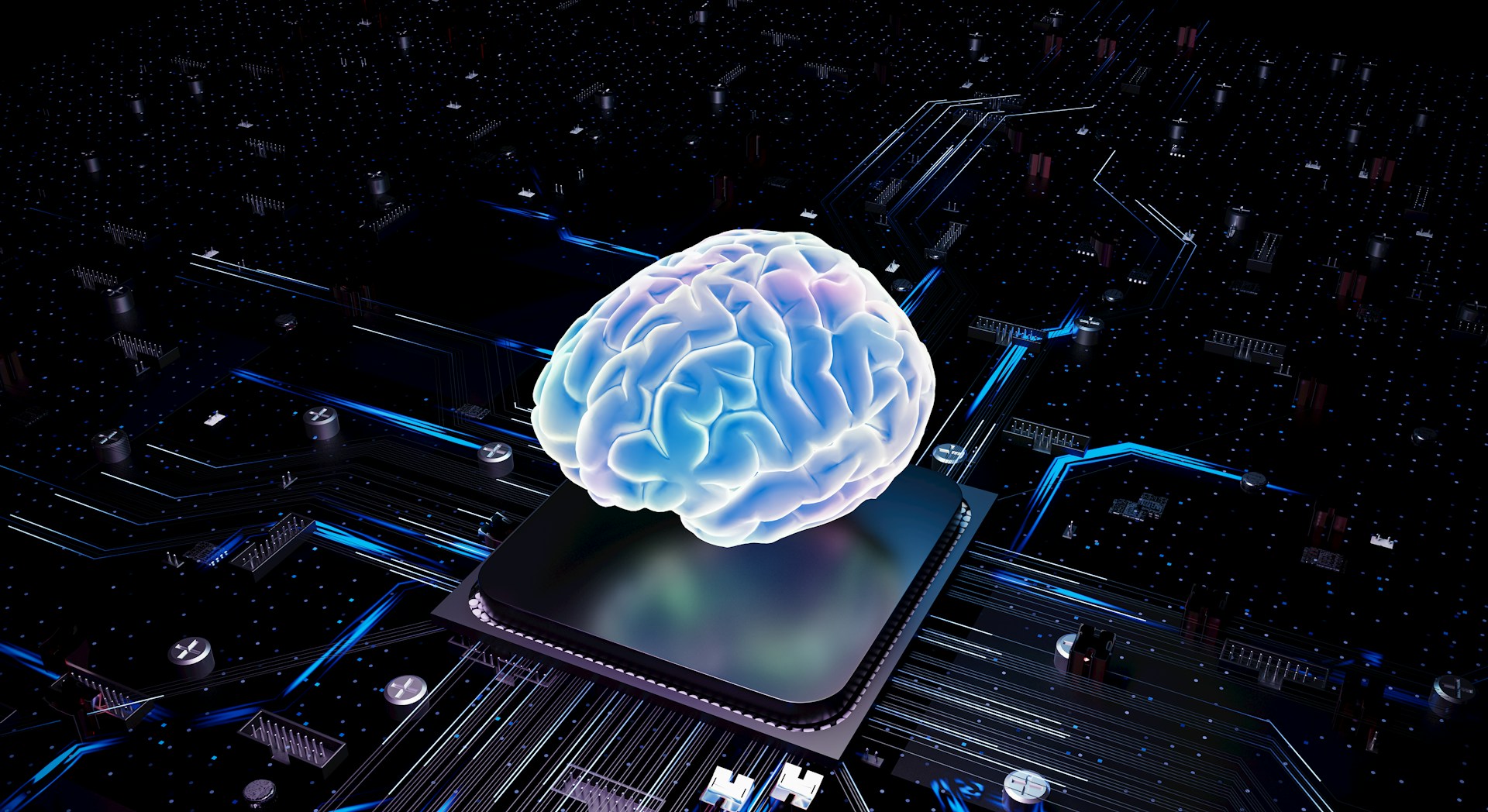
Photo by Sumaid pal Singh Bakshi on Unsplash
—------------------------------------------------------------------------------------------------------------------------

Comments (0)
Leave a comment